Certified mold inspector in ATWOOD, California
A certified mold inspector in ATWOOD, California finds the moisture source before anyone starts tearing out drywall. We map readings with a moisture meter and thermal imaging camera, pull air and surface samples, and hand you a report you can act on. Whether you smell something musty in Atwood Center or you're closing on a house near Atwood Lake Area, a licensed mold assessor ATWOOD property owners call starts with the same step: knowing what's actually growing and why.
Service overview
What a certified mold inspector in ATWOOD, California does
A certified mold inspector in ATWOOD, California is a trained assessor who locates mold growth, identifies the moisture feeding it, and documents both in a written report. The visit is diagnostic, not cosmetic. We walk the building with a moisture meter and a thermal imaging camera to find temperature differences behind drywall and under flooring, then confirm what we suspect with a boroscope through a small access hole. Air samples go into spore traps, surface samples get lifted with tape or swabs, and everything is labeled by room so the lab results line up with what we saw. Most single-family inspections run two to three hours and cover 1,500 to 3,000 square feet. ATWOOD sits in the foothills where winter rain and spring condensation keep crawl spaces and attics damp for weeks at a time. That is enough for black mold growth to take hold on insulation, drywall paper, and framing lumber. If you've noticed musty odors, a stain spreading across a ceiling, or an HVAC system that smells off when it kicks on, an ATWOOD certified mold inspector can tell you whether it's a surface issue or something deeper. We also work with buyers and agents who need a certified mold assessor near me ATWOOD searches turn up before a real estate deadline.
! Common warning signs
Musty odor that won't go away
A persistent musty smell usually means mold is growing somewhere you can't see, often in a crawl space, attic, or wall cavity. Air fresheners mask it; they don't fix it. Left alone, the growth spreads and the odor gets stronger.
Water stain spreading on ceiling or wall
A spreading stain means an active leak, and mold can start growing on drywall paper within 24 to 48 hours of water contact. Waiting to see if it dries out usually makes the problem worse and the repair more expensive.
Crawl space or attic that stays damp
ATWOOD's wet winters and spring condensation keep crawl spaces and attics damp for weeks. Insulation and framing stay wet, mold establishes, and the musty air migrates into living spaces through the stack effect.
Scope of work
What's included in a mold inspection
An inspection covers the assessment and the report. Remediation, if needed, is a separate scope. Here's what you get when you book.
-
01
Full building walkthrough
We inspect the entire building, not just the room where you noticed a problem. That includes the basement or crawl space, attic, bathrooms, kitchen, laundry area, and HVAC system. Moisture problems often start in one place and show up in another.
-
02
Moisture mapping with meters
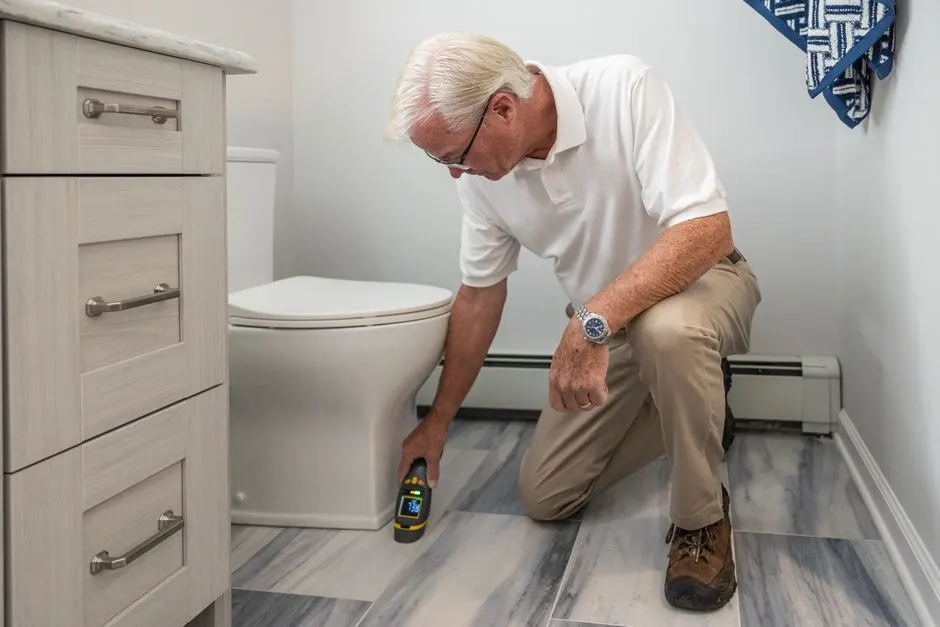
A moisture meter and thermal imaging camera are used to find elevated moisture behind drywall, under flooring, and in framing. Readings are logged by location so you can see exactly where the building is wet and how wet it is.
-
03
Air and surface sampling
We take air samples with spore traps and surface samples with tape lifts or swabs. Each sample is labeled by location and documented with chain of custody. Lab analysis is included, with results in two to three business days.
-
04
Written report with photos
The report includes photos, moisture readings, sample locations, lab results, and a plain-language summary. If remediation is needed, it also includes a scope of affected materials and square footage so contractors can bid from the same document.
Why a professional assessment pays off
Mold doesn't stop at the surface. An assessment tells you where it started, how far it spread, and what it will take to fix the cause instead of the symptom.
Book an inspectionTools and methods we use
Moisture meter
Pin and pinless meters measure moisture content in drywall, wood framing, and subfloor. Readings are logged by location to map where the building is wet and how wet it is.
Thermal imaging camera
An infrared camera reveals temperature differences behind walls and under floors that suggest trapped moisture. It guides where to probe with the moisture meter and where to cut an access hole.
Boroscope
A boroscope lets us see inside wall cavities and behind finished surfaces through a small hole. It confirms what the moisture meter and thermal camera suggest without opening up a wall.
Spore traps and air sampling pumps
Air samples are pulled through spore traps using calibrated pumps. Indoor samples are compared to an outdoor baseline to determine whether spore concentrations are elevated.
Local execution
ATWOOD's climate creates a specific set of mold risks. Winter rain saturates the ground and raises crawl space humidity for weeks. Spring condensation forms on cool surfaces in attics and on HVAC ductwork. Summer dry spells don't undo the damage; they just hide it. The housing stock matters too. Older homes in Old Town Atwood often have original crawl space vents that were sized for a drier climate, and newer construction in Atwood Heights uses tight building envelopes that trap moisture indoors. We adjust our inspection approach to the building type: more crawl space probing on older homes, more HVAC and attic focus on newer ones. If you're searching for a certified mold inspector in ATWOOD, California, the inspection should reflect the building you actually live in, not a generic checklist. We also account for the CDPH Mold Guidelines when sampling, which is the standard local remediation contractors expect.
How mold inspections run in ATWOOD
- • Atwood Center
- • Atwood Heights
- • Atwood Lake Area
- • Old Town Atwood
Recent work
Same-week scheduling across ATWOOD
When you need answers quickly
Most inspections get scheduled within three to five business days, and we hold slots for urgent situations like a burst pipe or an active leak. Our inspectors arrive with a moisture meter, thermal imaging camera, boroscope, and air sampling equipment on every call, so there's no second trip to gather data. If you're under a real estate deadline, tell us on the call and we'll work the schedule around it. Lab results come back in two to three business days, and we review the report with you by phone as soon as it's ready. For property managers in Atwood Industrial Park who need multiple units inspected, we can schedule consecutive appointments in a single day. Call (833) 929-5837 and we'll give you a realistic timeline before you book.
What to expect during the inspection
Phone intake
We ask what you're seeing, smelling, or suspecting, plus the building's age and any recent water damage from leaks or flooding. That conversation sets the scope. If you've had a roof leak or a bathroom overflow in the last 12 months, tell us. It usually points straight to where we should look first.
Walkthrough and moisture mapping
On site, we start at the source of the complaint and work outward. A moisture meter checks drywall, baseboards, and framing; a thermal imaging camera scans for temperature differences that suggest trapped moisture. Readings get logged by room. This stage takes 45 to 90 minutes on a typical house.
Sampling
Where growth is visible or suspected, we take surface samples with tape lifts or swabs. Air samples go through spore traps, one outdoors for a baseline and one or more indoors. Each sample is labeled and chain-of-custody documented. Lab turnaround is typically two to three business days.
What a mold inspection costs
Typical 2026 pricing for a residential mold inspection in ATWOOD runs $350 to $850. The low end covers a visual inspection with two or three air samples on a smaller home. The high end covers larger properties with crawl space and attic sampling, surface lifts, and more complex findings. Lab fees are included in the quote, and we give you the full price before we schedule. There's no charge for the phone consultation, and we'll tell you honestly if an inspection isn't warranted.
Square footage and building type
Larger homes take longer to inspect and usually require more samples. A 1,200-square-foot condo might need two air samples; a 3,000-square-foot house with a crawl space and attic might need five or six. Commercial buildings are quoted individually based on systems and square footage.
Number of samples
Each air or surface sample carries a lab fee. More samples mean more lab cost, but they also mean a more complete picture. We recommend the minimum number needed to answer the question, not the maximum the budget allows.
Access and complexity
Crawl spaces with limited access, attics with low clearance, and buildings with multiple HVAC zones take more time. If access requires cutting an inspection opening, that's discussed before we proceed so there are no surprises on the invoice.
Frequently asked questions
How do I find a certified mold inspector in ATWOOD, California?
Look for IICRC or ACAC credentials and confirm the inspector doesn't also sell remediation. Ask whether samples go to an accredited third-party lab and whether the report includes moisture readings and photos. In ATWOOD, you can call us at (833) 929-5837 and we'll explain our process before you book. A certified mold testing professional ATWOOD California residents can verify should be able to show credentials on request.
What certifications should a mold assessor have in ATWOOD CA?
At minimum, look for IICRC WRT and AMRT certification, which cover water damage and microbial remediation standards. ACAC CMI is another recognized credential. Inspectors working in older homes should also hold EPA Lead-Safe certification. California doesn't license mold assessors statewide, so certification through a recognized body is the main quality signal. Ask for proof and check the certifying organization's directory.
How much does a certified mold inspector cost in ATWOOD?
Typical 2026 pricing for a residential inspection in ATWOOD runs $350 to $850, depending on square footage and how many samples are taken. A basic visual inspection with two or three air samples sits at the low end; a larger home with crawl space and attic sampling plus surface lifts runs higher. Lab fees are usually included in the quote. We give you the full price before we schedule.
Is a licensed mold assessor required in ATWOOD, California?
California does not currently require a state license to perform mold assessment, but certified inspectors are the standard the industry follows. The CDPH Mold Guidelines recommend assessment by a qualified professional, and lenders and insurers often require certification documentation. Hiring a licensed mold assessor near me ATWOOD searches surface means hiring someone with IICRC or ACAC credentials, insurance, and a track record.
Related services
Mold Inspection Near Me
A local mold inspection near me search in ATWOOD should land on an inspector who can be on site within days. We cover the full building, from crawl space to attic, and document findings with photos and lab results.
Mold Inspection
A standard mold inspection covers visual assessment, moisture mapping, and sampling. It's the starting point for any mold concern and the basis for every recommendation we make.
Schedule a certified mold inspector in ATWOOD, California
If you smell something musty, see a stain spreading, or you're buying a home and need answers before a deadline, call us. We'll explain the process, give you a firm price, and get you on the schedule. Call (833) 929-5837.